

Every trip starts the same way at my house. The 2019 Outback gets loaded, the watercolor block goes behind the passenger seat, and I stand in the driveway holding a yoga mat and asking whether it earns its space. I am 61, my lower back has opinions after thirty years of standing at an easel, and I have slept in enough motel rooms to know that the floor is always harder than the carpet suggests. So I have travelled with both kinds of mat: the Gaiam folding travel mat, which folds into a small square, and a thick standard mat, the half inch rolled kind most studios keep in a pile by the door. They are not competing for the same job.
The short answer, if you are deciding right now. For a flight to Tucson to see my sister, or a two week road trip where the car is packed to the roof, the Gaiam comes and the thick mat stays home. For a week in one rented cabin with a hard floor and no plans, the thick mat earns its space and the Gaiam rides along as a second. The Gaiam wins on portability by a wide margin. The thick mat wins on comfort the moment you kneel down. Everything after this is the detail behind that.
What Each Mat Actually Is
The Gaiam Folding Yoga Travel Mat is 68 inches long, 24 inches wide and 2mm thick, which the listing also gives as 0.08 inch. It weighs 2 pounds. The material is PVC, and it folds rather than rolls, which is the whole idea. Folded, it makes a square about 10 inches by 12 inches. That is small enough to drop into a carry on, tuck under the passenger seat, or slide into the tote with my sketchbook and a bottle of water. Nothing about it is bulky, and nothing about it announces itself as fitness equipment.
A thick standard mat is the one you already know. Half an inch or so of cushion, rolled into a cylinder, usually living in the trunk or a closet. Studio mats tend to be denser and heavier because they are built to survive daily classes. The softer ones sold for home use are lighter but still roll into a shape that fights with a suitcase. You are carrying a cylinder, and a cylinder is the least cooperative shape in a packed car.
I learned that in the driveway one June morning, trying to fit a rolled mat into the Outback alongside a cooler, two canvas bags and a folding easel. The roll went in first and then refused to stay anywhere. It slid under the seat every time I braked and wedged itself against the cooler by the second hour, and I eventually strapped it to the side panel with a bungee cord, which is a lot of ceremony for something I use for ten minutes a night. The folded square went into the tote with the sketchbook and I did not think about it again until I stopped for the day.
That difference in shape is really the whole comparison. A folded square fills a gap in a bag. A roll demands its own space and usually wins it, because nothing else fits around it. The table below is how the two compare on the things I actually notice after a day of driving.
| Gaiam Folding Travel Mat | Thick Standard Mat | |
|---|---|---|
| Packed size | Folds to a square about 10 by 12 inches, flat | Rolls into a cylinder that is too long for most carry ons |
| Weight | 2 pounds | Noticeably heavier, dense studio mats most of all |
| Cushion on hard floors | 2mm of PVC between you and the floor | Half an inch or more of foam or rubber |
| Kneeling and floor sequences | Fine for a few minutes, then the knees notice | Comfortable for a long, unhurried session |
| Balance and standing work | Direct ground feel, so standing postures feel steady | Cushion can feel soft under a single leg |
| Lying flat once opened | Sits down and stays down, no curl at the ends | Keeps the memory of the roll for a while |
| Durability at the creases | Fold lines soften and eventually look worn | One continuous surface with nothing to crease |
| Cleaning | Spot clean with a damp cloth, dry flat, grit collects in the folds | Wipe down and air out, though thicker foam holds moisture longer |
| Uses beyond stretching | Knee pad at a trailhead, seat cushion on a wet bench, something dry to kneel on | Stays a mat |
| Best for | Flights, carry ons, long drives, painting days outdoors | A week in one place with a hard floor |
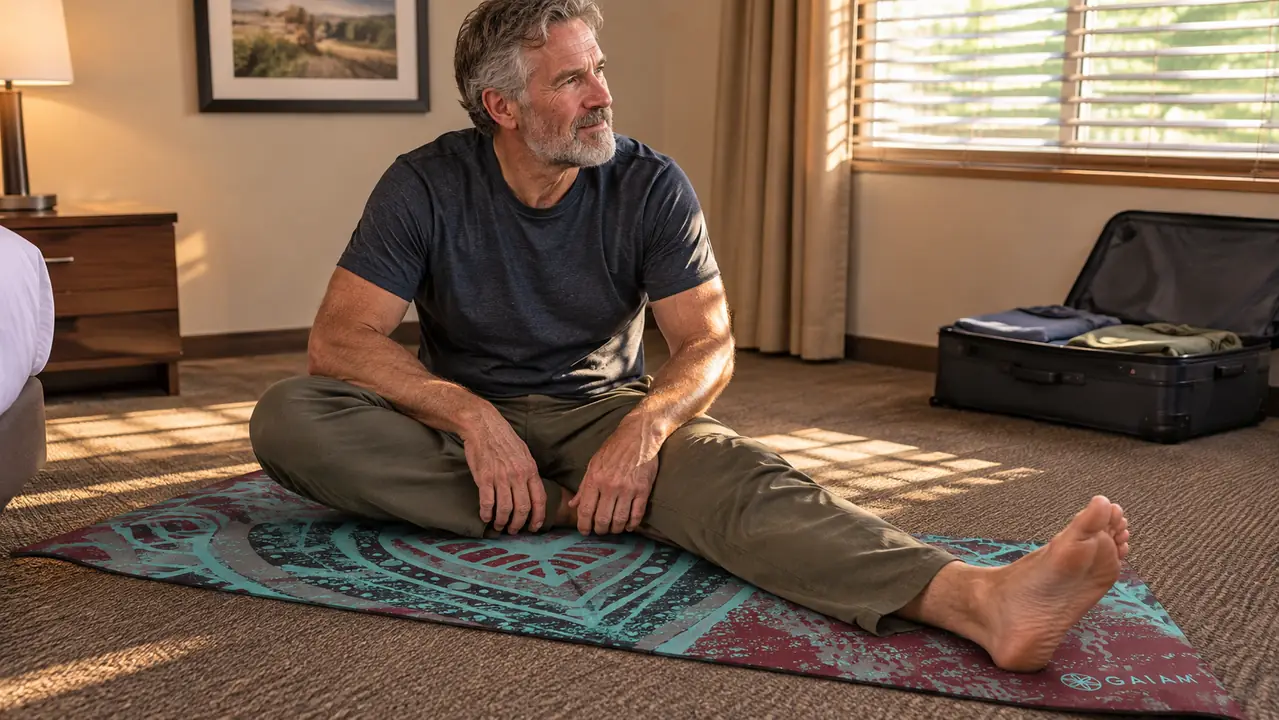
Where the Gaiam Travel Mat Wins
Portability is not a small feature here. It is the feature. The Gaiam weighs 2 pounds and folds flat, so it goes in the bag rather than on top of the bag. On the flight to Tucson it fits in the carry on next to my clothes, which means I am not the person at the gate explaining that a rolled mat is technically part of my personal item. In the car it lives under the passenger seat, out of the way, and I forget it is there until I want it. That is the highest compliment I can pay a piece of travel gear.
It also lies flat. That sounds like a small thing until you have unrolled a thick mat on a motel floor at nine at night and watched both ends curl up like a dried leaf. A folded mat has creases, but it sits down and stays down. That matters when I am stretching in the small space between a bed and a dresser, because curled ends eat the room I do not have.
Two summers ago I stopped at a motel outside Hays, Kansas, around eight at night, and the room had perhaps four feet of clear floor between the bed and the dresser. A rolled mat would have had to stay rolled. The Gaiam opened into that strip and I sat on it with my back against the bed frame for a quarter of an hour before I turned in. It was not a real session. It was the difference between a stiff morning and an ordinary one, and I have had enough stiff mornings to know which I prefer.
And it does more than one job. I have used mine as a knee pad at a trailhead while I set up a sketch, as a seat cushion on a damp bench at an overlook, and as something dry to kneel on while I dig through the back of the Outback. A thick rolled mat can do those things too, but I never carry it far enough to find out. The mat you have with you beats the mat in the trunk.
Where a Thick Standard Mat Wins
Comfort, plainly. Two millimeters of PVC is not much between a hip bone and a motel floor. When I do a longer floor sequence, the kind with a lot of kneeling and slow movement, my knees and wrists notice the difference within a few minutes. On the thick mat I can stay down there for twenty minutes, which is what I want after a day of driving. The Gaiam is fine for a short stretch before bed. It is not the mat I would choose for a long, unhurried session.
The clearest test was a rented cabin near Linville Gorge with a hardwood floor and one small rug that did not reach where I wanted to sit. I unrolled the thick mat in front of the wood stove, worked slowly through my hips, back and shoulders while the kettle heated, and stayed there a full twenty minutes without thinking about the floor once. On the Gaiam, on that same boards, I would have been shifting my weight and cutting things short at five. That is not a knock on the thin mat. It is a different tool for a different floor.
The thick mat is also the more durable of the two over years. A folding mat has a hard life at its creases. Fold the same line four hundred times and it starts to soften, then to look tired, then to hold grit in the valley of the fold. The thick mat has one continuous surface with nothing to wear except the top layer. Mine has been in the car for several seasons and still looks like a mat. The Gaiam looks like a mat that has been folded a great many times, because it has.
One more thing, and it surprised me. The thick mat is heavier, and heavier means it stays put. On a hardwood floor or a smooth concrete porch, the Gaiam can slide a little under a bare foot. The thick mat grips and stays. If I am stretching on a polished floor, I put the thick mat down and stop thinking about it.
Going somewhere with a carry on? Start with the mat that fits in it.
The Gaiam Folding Yoga Travel Mat is 68 by 24 inches, 2mm thick, and weighs 2 pounds. Folded, it is a square about 10 by 12 inches, so it goes in the bag you were already bringing instead of becoming a second thing to carry.
Amazon Check Today's Price on Amazon →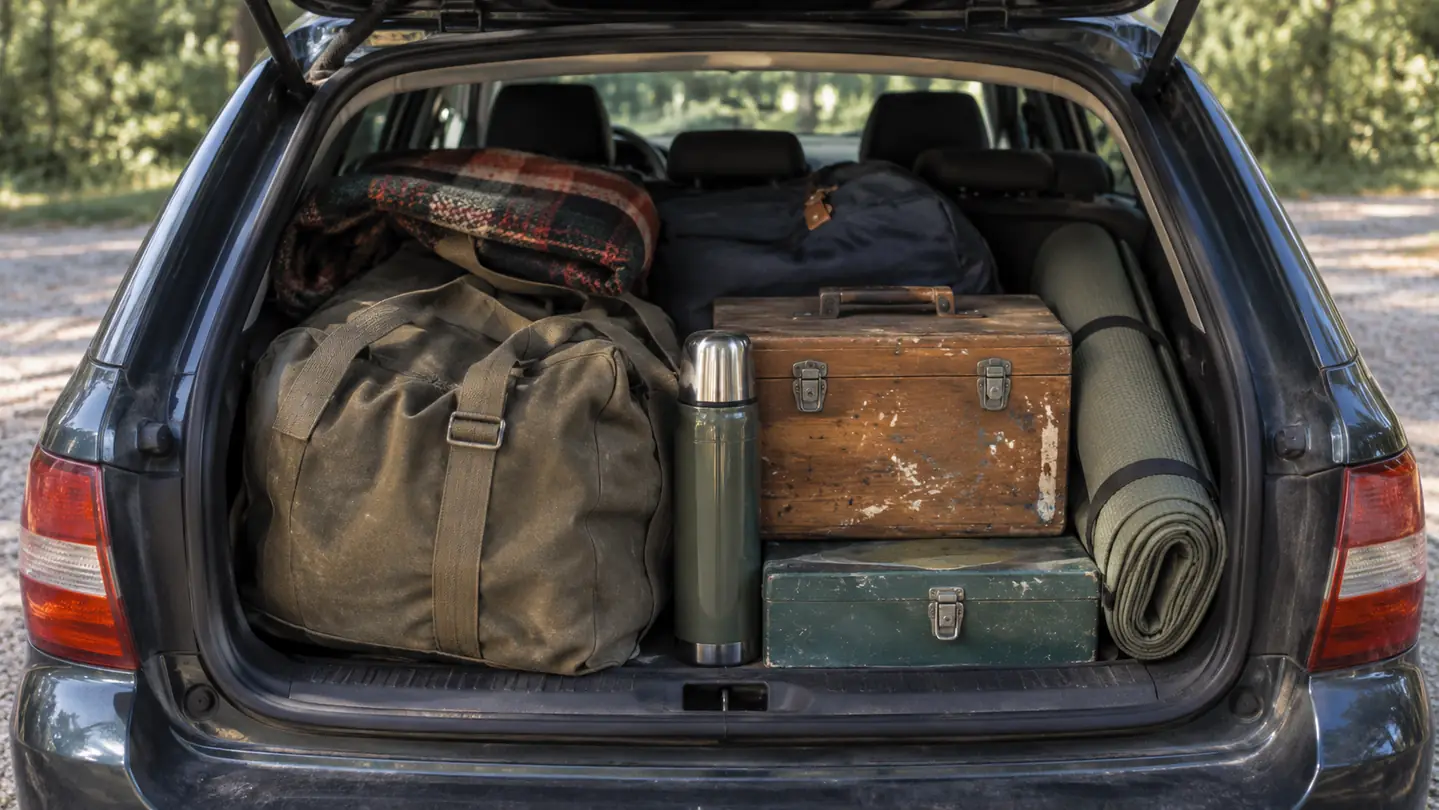
The Compromise I Actually Pack
Most trips, I take both, and it costs me nothing. The Gaiam goes in the tote with the paints. The thick mat goes in the back of the Outback under the cooler, where it has lived for years anyway. At the cabin I unroll the thick one and leave it on the floor for the week. At the trailhead, or in a motel room somewhere in Kansas, I take the Gaiam out of the bag and use it for ten minutes before bed. Two mats, two jobs, and one of them never has to be carried.
If I had to cut one, the choice comes down to how the trip moves. A trip that moves every day, with a different bed each night, does not need a thick mat. It needs something that takes up no space and comes out of the bag easily. A trip that stays put needs the cushion, and portability stops mattering because the mat is not going anywhere.
The Gaiam did not replace my thick mat. It replaced the evenings I would have skipped stretching altogether because the mat was too much trouble to carry.
Packing Notes for the Outback
The folded square is about the size of a thick paperback, and it goes in more places than you would expect: the seat back pocket, the door bin, the gap between the cooler and the wheel well. I keep mine in a canvas tote with the watercolor block so it never becomes a separate thing to remember. When I fly, it goes in the carry on flat against the back panel, and I have never once been asked about it.
In the Outback the tote rides behind the driver seat, not in the well under the cargo floor, because that well is where the jumper cables and the folding shovel live and I am not unloading half the car to reach a mat. On the passenger seat the tote stays put. In the door pocket it does not fit, which I know because I tried it once and found it on the floor mat at the next stop. When Walt comes along he puts his thermos where the tote goes, so the tote moves to the floor behind his seat and the mat goes with it.
Care is simple. The listing says to spot clean with a damp cloth, cold water and mild detergent, then dry flat, and that is what I do at the end of a trip. Dry flat matters with a folding mat, because water sitting in the creases is how a mat starts to smell. A thick mat takes a full wipe down and a longer airing, since foam holds moisture. Neither is difficult. Both want to be dry before they get packed away.
Who Should Buy Which
Buy the Gaiam if your trips are flights, carry ons, or long drives where the car is full, and if you want a mat you will actually take out at the end of a day. It suits short sessions, stretching before bed, sitting on the ground while you paint or read, and any trip where a mat would otherwise stay home. It is also the better choice for someone who travels often and does not own a mat yet, because the size is what makes it get used.
Buy a thick standard mat if the mat lives at home or at a cabin and the floor is hard, or if your sessions run long and involve a lot of kneeling and floor work. Buy it also if you have given up on a thin mat before because your knees complained. And if you are like me, buy the Gaiam for the bag and keep the thick one in the car. The mistake is owning only the thick mat and leaving it in the trunk for a week because it is too much trouble to carry inside.
One square, 2 pounds, and it fits in the bag you already own.
The Gaiam Folding Yoga Travel Mat folds to about 10 by 12 inches and opens to 68 by 24 inches at 2mm thick. Spot clean it, dry it flat, and it is ready for the next trip.
Amazon Check Today's Price on Amazon →