

The nodding is what gets you. Not the driving itself. Somewhere past the second hour my chin drops, my head snaps back up, and I tell myself I am fine. Then I pull into the overlook, unfold the camp chair, and find my neck locked and my lower back stiff from bracing against the seat. I get twenty good minutes of painting before I want to lie down in the grass. The road did that, not the hike.
I am Iris Vandermeer, sixty-one, retired after thirty-one years teaching high school art, now living in Asheville, North Carolina. Most years I take several long drives in my 2019 Subaru Outback to state and national parks with a watercolor block in the back, plus one or two flights to see my sister in Tucson. Decades of standing at an easel left me with a stiff lower back and neck, and I sleep lightly in any bed that is not mine. What I wanted was unglamorous: arrive rested enough to work. The BCOZZY pillow is the first travel pillow that actually helped.
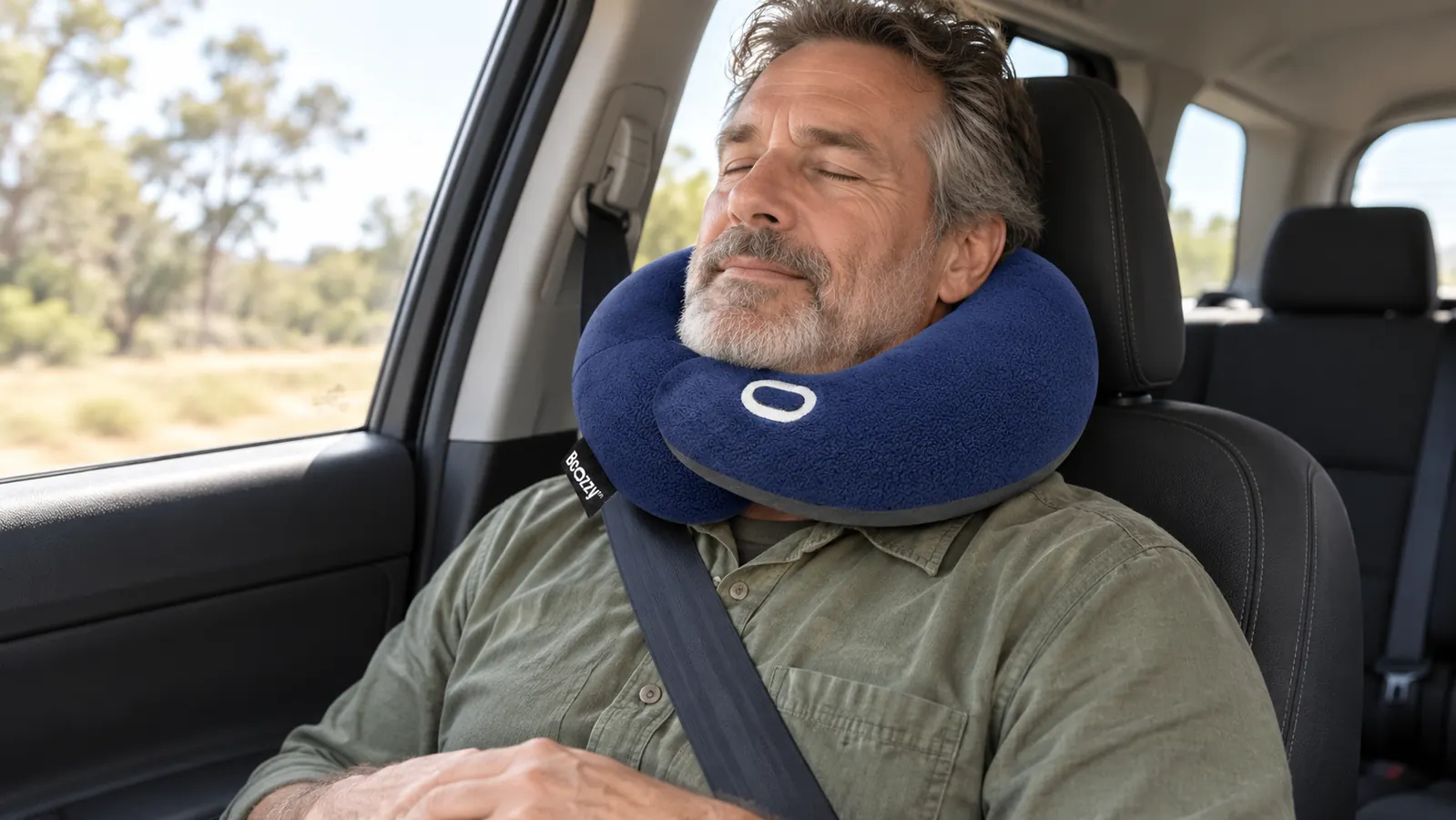
For years the standard U shape made things worse. It pushed the back of my head forward and left my chin with nothing to rest on, so my neck muscles stayed awake the entire drive. I tried rolling a fleece jacket into a doughnut and tying it shut with a shoelace. I tried a folded blanket wedged against the window glass. On one drive toward the Smokies I gave up, opened the window in forty degree air, and drove the last hour with cold wind on my face just to stay alert. The difference with the BCOZZY is the overlapping arms. They come around the front and give your chin somewhere to land, which means your head is being held rather than balanced by a tired neck. That is the whole idea, and it took me a few tries to use it correctly.
Stop balancing your head. Give your chin something to rest on.
Sized by neck circumference, machine washable top to bottom, and packed with a carry bag and snap loop for the trip home. Check the current size options and today's price on Amazon.
Amazon See the BCOZZY Pillow on Amazon →Step 1: Measure Your Neck Before You Pick a Size
This pillow is sized by neck circumference, and the listing is specific about it: Large fits necks up to 16 inches, and X-Large is for 16 inches or more. That is the entire fitting decision, and it is worth two minutes at the kitchen table rather than a guess at a checkout screen.
I did this on a Sunday afternoon in February, standing at the kitchen table with my reading glasses on while Walt asked what on earth I was measuring. Wrap a soft tape measure around the base of your neck, at the height where a shirt collar sits, and keep it level all the way around. No tape measure in the house? Use a piece of string, pinch it where it meets, and lay it flat against a ruler. Write the number on a sticky note and keep it in the glove box, because you will want it again when the second one is a gift. I measured fifteen inches and went with the Large.
Why the measurement matters: a pillow that is too big rides up and pushes your head forward, which is the exact position you are trying to avoid. Too small and it slides down your shoulders every time you shift in the seat. I know because the airport kiosk pillow I bought maybe ten years ago came in one size only, and it managed to do both of those things depending on which way I tilted. The Large is 11.02 inches by 8.27 inches, round in shape, filled with polyester and covered in 100 percent polyester fabric. There is no break-in period. Mine felt the same in week one as it does now, which is either reassuring or a little disappointing depending on what you expected.
Step 2: Learn the Three Positions at Home, Not at 70 mph
The arms overlap, and there are three ways to wear the thing. You can bring the arms forward and under your chin. You can fold the pillow to support one side of your head. Or you can rotate it so you get front and side support at the same time. All three are described in the listing, and none of them are obvious the first time you sit down in a parked car with it.
So practice in an armchair. I spent twenty minutes in the living room on a Tuesday evening with a cup of chamomile, working through each position while the light was still good. Then I did a second session in the parked Outback in the driveway with the engine off, so I could feel what the seat actually does to my posture instead of what I assumed it did. The chin position is the one I use most, because it stops the nodding instead of merely cushioning it. Folded to the side is what I use on a plane when I want to lean toward the window. The rotated version is for the passenger seat, when the seat itself will not recline and I need support the chair cannot give me.
Here is what I got wrong first. I wore it backwards, arms behind my neck, the way a U pillow sits. That is not what this is. If your chin still drops, the arms are in the wrong place. Once I brought them around the front, the pillow held my head and my neck muscles got to stop working. Twenty minutes of practice at home saved me an hour of fumbling at a rest stop outside Roanoke, where I sat in the car with the BCOZZY on sideways and could not work out why it felt no better than the old one.
Step 3: Set Up the Seat So the Pillow Isn't Doing All the Work
No pillow can fix a seat that is fighting it. Before the pillow goes on, raise the headrest so its top is level with the top of your head, not the base of your skull. Then tilt the seatback back a few degrees from bolt upright. Not enough to slouch. Just enough that gravity helps you instead of pulling your chin toward your chest. I check both of those before I put the key in, in that order, every time, the same way I check the mirrors.
In the Outback I also bring the steering wheel a little closer and lower, which lets my shoulders rest against the seatback instead of reaching for it. On long stretches I set the lumbar support one notch firmer than I would around town. That single adjustment buys me an hour before my lower back starts complaining, and it costs nothing. I found it by accident on the drive to Shenandoah, when I changed the setting at a gas station outside Lexington and then drove two more hours without once noticing my back.
Only then does the pillow go on. What you are after is a head that stays where you put it once the road gets boring, because boredom is when the nodding starts. The hard driving was never the problem. The flat, straight, four-lane miles were the problem, and those are exactly the miles where something under your chin is the only thing keeping you upright.
The first hour I wore it backwards, arms behind my neck like a U pillow, and my chin still dropped. Once the arms came around the front, the nodding stopped.
Step 4: Build a Rest Stop That Actually Restores You
I stop every ninety minutes to two hours, whether I feel like I need it or not. Not to fuel up. To get out, walk a lap of the parking area, roll my shoulders back, and turn my head slowly left and right a few times. Five minutes of that does more for the next two hours than a second cup of coffee, and I say that as someone who loves the second cup of coffee.
When I am genuinely tired, I take the nap instead of arguing with it. I park in the shade, recline the seat, put the pillow on with the arms under my chin, and set a timer for twenty minutes. Twenty is enough to take the edge off and short enough that I do not wake up foggy. Then I walk a lap before I pull back onto the road. I learned the timer the hard way after a stop outside Knoxville where I slept fifty minutes, woke up thick and slow, and spent the next hour driving badly with the radio turned up.
What I no longer do is push through to the next town to save time. Every time I have done that, I arrived too wrung out to paint, and painting was the reason for the drive. A twenty minute stop costs me less than a wasted afternoon at the easel.
Step 5: Carry the Same Setup Onto a Plane
The BCOZZY comes with a carry bag and a snap loop, so it clips to the outside of my roller bag instead of taking up space inside it. That matters on the flight to Tucson, where the carry-on is already full of paper, brushes and a roll of masking tape.
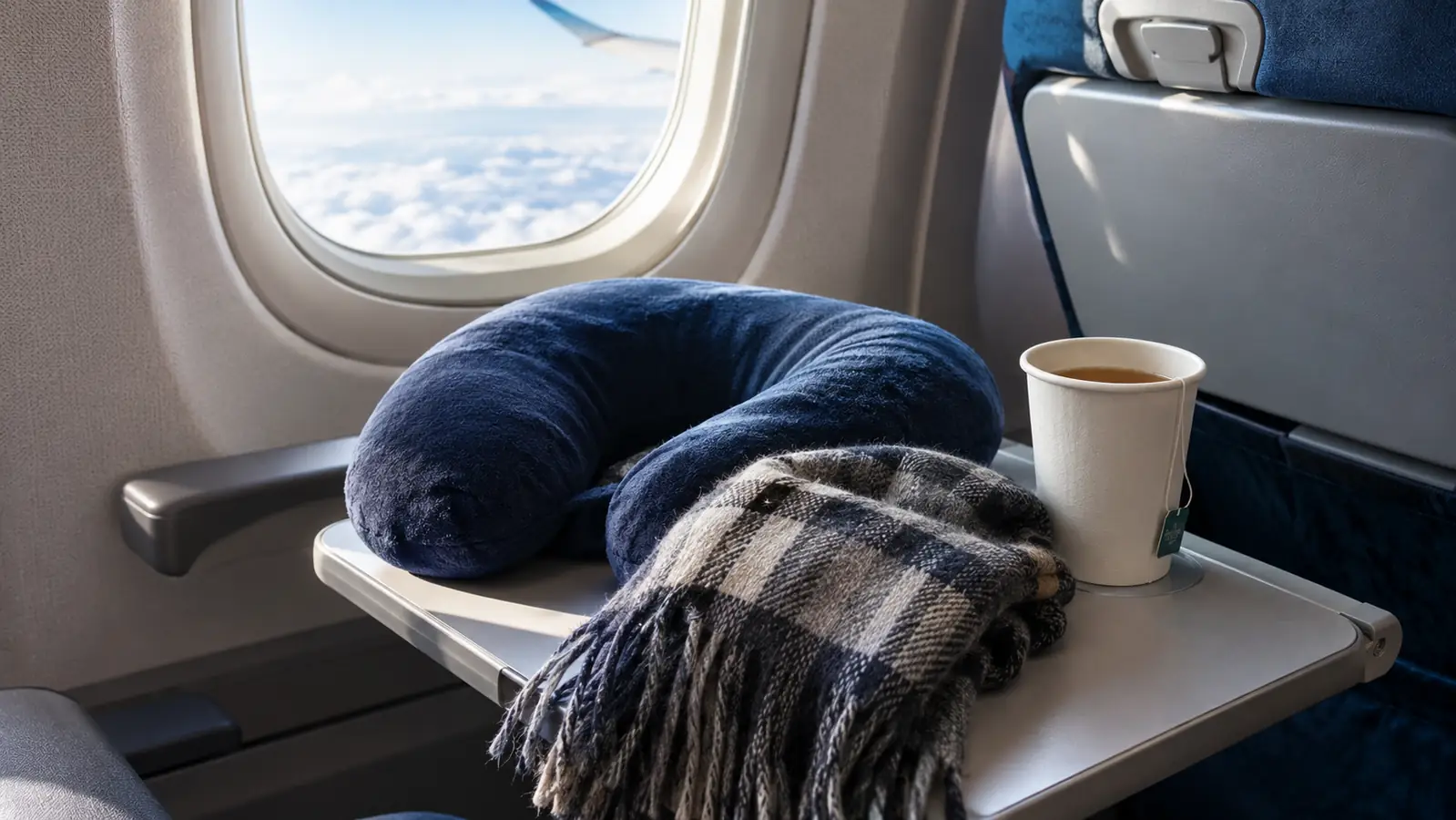
I book a window seat when I can. It gives me a wall to lean toward, and nobody has to climb over me while I am asleep. In the air I fold the pillow against the window, or rotate it for front and side support when the seat will not recline, which on the last two flights was every seat on the plane. Boarding is when I put it on, not takeoff. Boarding is the stretch where I sit still with nothing to do and start to slump. On the last trip out I wore it through the whole line at the gate and the woman behind me asked where I had found one that held her head still, which is not a conversation I have ever had about a U pillow.
After the trip the whole pillow goes in the machine. Not a cover, the entire thing. It is machine washable, which I appreciate more than I expected to, since it spends a flight against my face and then lives in the back of the car for weeks at a time. Mine comes out of the suitcase, goes straight into the wash, and air dries on the porch rail before it goes back out to the car, where it waits for the next drive.
What Else Helps
Water first. I keep a bottle in the door pocket and drink more than feels necessary, because the dry air from a car heater and the dry air on a plane both quietly wear me down, and a dry throat wakes me up faster than anything. Herbal tea in a thermos for the drive, and no coffee after noon if I want to sleep that night. On the flight I ask for water twice, once when the cart comes through and once again an hour later, because the little cup is gone in three swallows.
A scarf or a light layer over the shoulders, because a body that is cold will not settle, no matter how good the pillow is. Gentle stretching at every stop, the kind where you move slowly and stop before it hurts. None of this is complicated. It is just the difference between arriving able to work and arriving able to do nothing but lie down.
If you want the longer view, I keep six months of notes on how the BCOZZY has held up, and if you are still weighing it against the U shape you probably already own, there is a straight head to head on that too.
Two minutes with a tape measure is the whole fitting decision.
Large fits necks up to 16 inches, X-Large for 16 and above. Machine washable, polyester fill, carry bag and snap loop included. Check today's price and size availability on Amazon.
Amazon Check Today's Price on Amazon →