Two hundred miles into a drive, the coffee I had at breakfast catches up with me, and the only water in the car is a plastic bottle that has been rolling under the passenger seat since the last trip. I know this scene well. I have driven my 2019 Subaru Outback to a lot of trailheads and overlooks, and for years I handled water the lazy way. I bought bottles at gas stations, stacked the empties in the footwell, and arrived at every motel with a car that smelled faintly of warm plastic.
The LifeStraw Go bottle is what ended that cycle for me. It is a one-liter bottle with a filter built into the drinking straw, so I can fill it from a sink I do not entirely trust and still get water that tastes clean and does not leave me thinking about it for the next hour. It rides in the car on every trip now, along with a handful of habits I had to learn the slow way. What follows is the routine I actually use, in the order a driving day happens.
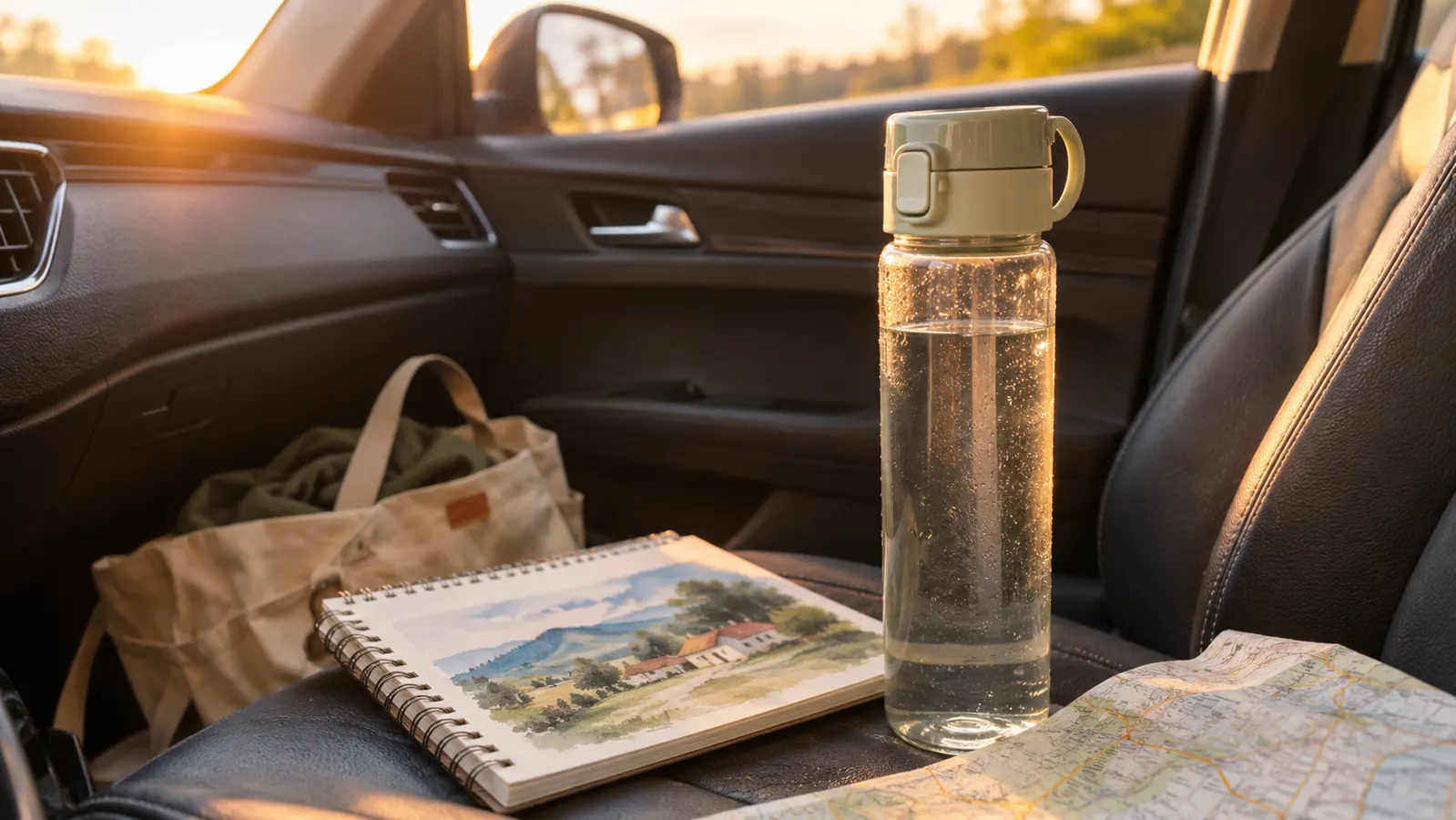
One bottle on the passenger seat, and the gas station water run is over
The Go Series holds a liter, filters as you sip, and stands upright on the seat beside you. It is the piece of gear I stopped thinking about two trips in.
Amazon Check Today's Price on Amazon →Step 1: Fill It Before You Leave the Driveway
The night before a drive, I fill the bottle at my own kitchen sink and set it by the door with my painting bag. This is too obvious to mention, and yet it is the step I used to skip. You leave the house with an empty bottle, spend the first two hours telling yourself you will fill it at the next stop, and then drink nothing until lunch.
One morning in April I tried something cheaper first. I had a collapsible silicone bottle that packed flat, and I filled it at the kitchen sink before a drive up to the Blue Ridge Parkway. By the second hour the water tasted of rubber. By the third it had leaked a slow puddle into my tote bag, which meant my sketchbook had a damp corner for the rest of the week. I am not against light gear. I am against gear that makes me not want to drink. That was the trip I stopped looking for a cleverer bottle and started looking for one that was simply pleasant to use.
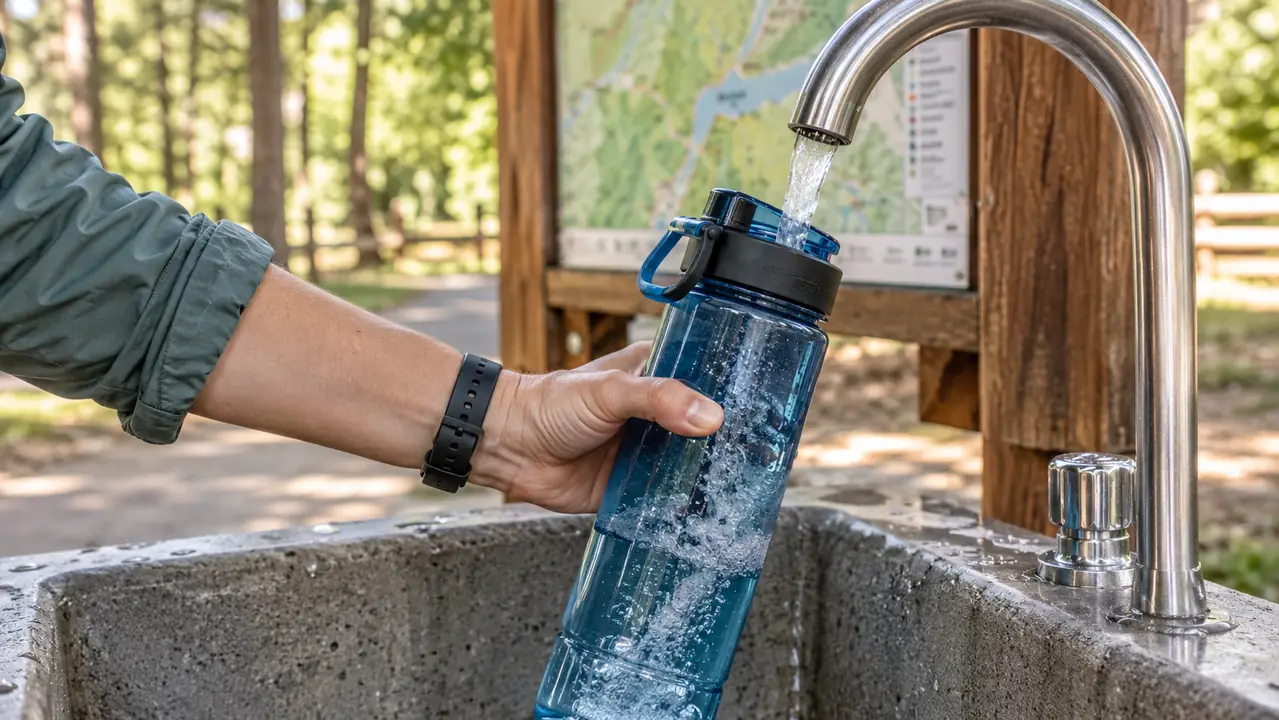
The bottle holds one liter, a little more than a quart. For me that is about three hours of ordinary sipping, less on a hot day or when I have been arguing with myself about a painting problem for an hour. So before I pull out, I look at the drive in segments. Where are the state parks, the visitor centers, the rest areas with a sink that actually runs? I do not need an itinerary. I need to know roughly where the next faucet is, because a filter only helps if there is water to put in it.
Two details I noticed in the first week. The bottle weighs 268 grams empty, light enough that I forget it is in the car until I want it. And it stands on its own flat base, so it stays put on the seat instead of rolling onto the floor mat at the first hard brake.
Step 2: Know What the Filter Does, and What It Does Not Do
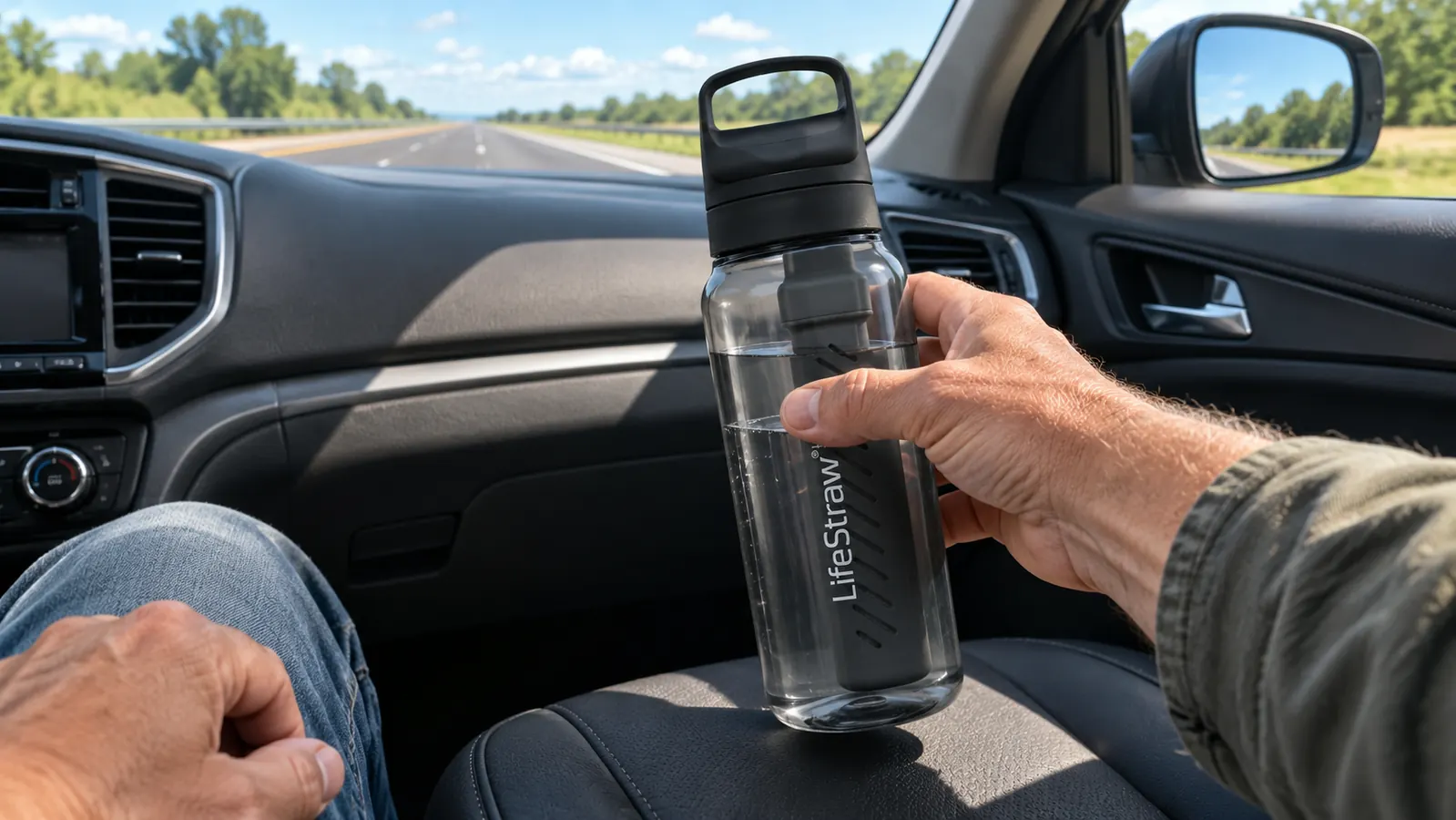
The Go Series filters in two stages, and it is worth knowing which stage does what. The membrane microfilter is the serious one. LifeStraw rates it to protect against 99.999999 percent of bacteria, including E. coli and Salmonella, and 99.999 percent of parasites. The carbon filter sits ahead of it and reduces chlorine, odors and organic chemical matter, which is the part that keeps a campground tap from tasting like a swimming pool.
The first place I noticed the carbon stage doing real work was a campground tap outside Cherokee. The water came out smelling strongly of chlorine, the way municipal water sometimes does at the end of a line, and on an ordinary day I would have skipped it and gone back to the car thirsty. Instead I filled the bottle and drank about ten minutes later. The smell was gone and the taste was flat and clean, close to what comes out of my own kitchen tap at home. I still do not know what was in that water. I do know the difference the carbon made was obvious enough that I noticed it without looking for it.
What it does not do matters just as much, and I would rather say this plainly than have you find out at a bad moment. LifeStraw lists a maximum supported TDS of 300 ppm. That means the bottle is built for ordinary fresh water: taps, fountains, most wells, most lakes. It is not a desalinator, and it will not soften hard water or strip dissolved minerals. If a sign says the water is not for drinking, I believe the sign. A filter in my hand is not a substitute for paying attention.
The lifespan numbers are the other thing to hold in your head. The membrane is rated for up to 1,000 gallons, which LifeStraw describes as about five years of daily use. The carbon filter lasts up to 26 gallons. Those two numbers are far apart, and that gap is useful information: the carbon is the part you will actually be watching, not the membrane.
The membrane is rated for up to 1,000 gallons. The carbon filter lasts about 26. That gap tells you which part you will actually be replacing.
Step 3: Sip Small and Often Instead of Gulping at Stops
My old pattern was to drink nothing for two hours and then drink a great deal at a rest area. That never felt good. My lower back is stiff from decades of standing at an easel, and long stretches in the driver's seat make it worse, so I already stop more often than most people do. Adding a big slug of water at every stop made the stops longer and the driving less comfortable.
There was one July afternoon that taught me the difference between sipping and gulping. I drove from Asheville toward the coast and the car was hot enough that I kept the air on full for hours. I finished the whole liter before I reached the halfway point, which is unusual for me, and then spent forty minutes watching exits go by and thinking about water instead of the road. Since then I top the bottle off at every stop whether or not it feels empty. It is a small chore that costs a minute and removes a whole category of distraction.
What works better is dull: small sips, all day, from a bottle within reach. A liter now lasts me through a morning, where it used to sit untouched until I was thirsty enough to notice. I keep the bottle where I can pick it up with one hand without taking my eyes off the road, and I put it back the same way.
The unexpected part is that this changed how I plan a day. I no longer build the drive around finding something to drink. The stops I make now are for my back and for the view, which are better reasons to stop. I pull over at an overlook, walk a few minutes, sip, and get back in the car. I arrive at the motel feeling like a person rather than a dried-out husk.
Step 4: Keep It Within Arm's Reach
The bottle is 11.02 inches tall with a 3.54 inch base, so it is taller than a cup holder is deep and about as wide as one. In the Outback it rides on the passenger seat or in the pocket behind me, standing on its own so it does not tip when I brake. I checked the fit once and then stopped thinking about it.
One thing I did not expect is that the bottle became part of how I paint. At an overlook outside Blowing Rock I set it in the grass a foot from my easel while I worked up a study of the ridge line, and I drank from it maybe six times in ninety minutes without thinking about it once. That is the test I care about. Gear that asks to be remembered is gear that gets left in the car. This one sits where I can see it, so I use it.
This is not a minor detail. A bottle in the trunk is a bottle you do not drink from. The reason the LifeStraw Go works for me on the road is not the filtration, which is genuinely good, but that it is a bottle I would carry anyway. I do not have to remember to bring a filter. I have to remember to bring my water, and that is a much easier habit to keep.
When I stop to paint, I carry it down to the spot with my bag and set it on the ground beside the easel. It has been dropped, rolled off a picnic table and left in a warm car overnight, and it has come through all of it without a fuss. That is a low bar, I know. It is also the bar that matters for anything that lives in a car.
Step 5: Do a Two-Minute Reset at the End of the Day
At the motel, I empty whatever is left, rinse the bottle, and leave it open on the desk to dry overnight. A bottle that sits sealed and half full in a warm car for three days is a bottle I will not want to drink from on the fourth. The rinse takes less time than finding a parking space.
I also keep a line in my trip journal with the date I started the carbon filter. Twenty-six gallons sounds like a generous number until you are drinking a liter at a time, three or four times a day, on a two-week trip. I do the arithmetic once a season. When the water starts tasting flat or faintly of the tap again, that is my signal to change it.
The membrane I mostly leave alone. At 1,000 gallons it is a years-long part at my pace, not a monthly one. What I actually maintain is the habit: rinse, dry, note the date. That is the whole routine, and it takes about two minutes.
What Else Helps
Three things make more difference than any single piece of gear. The first is a second bottle. I keep a plain one-liter bottle in the car as well, so I am never dependent on one fill, and the filtered bottle stays the one I drink from when the source is uncertain.
The second is a soft cooler bag in the back seat. Water that has been baking in a hot car all afternoon is unpleasant enough that I skip it, and skipping it is the exact problem I am trying to solve. A bag and a frozen pack keep a bottle drinkable from morning to evening. Mine lives behind the driver's seat and holds the bottle upright, and on a ninety degree day it buys me until late afternoon before the water turns warm enough that I start avoiding it.
The third is a short list of fill points I already know: the visitor center at the state park, the sink in the motel ice room, the fountain at the trailhead. It sounds fussy written down. It takes five minutes to make, and it means I am never guessing at the end of a long day, which is exactly when I am least willing to go looking.
The bottle I stopped thinking about two trips in
One liter, a filter built into the straw, and a membrane rated for about five years of daily use. If your drives run past sinks you are not sure about, start here.
Amazon Check Today's Price on Amazon →