

Every summer I load a 2019 Subaru Outback with a folding easel, a watercolor box, and a cooler that never quite closes right, and I drive from Asheville out to whatever park has caught my eye. My lower back has opinions by hour three. For years the trunk also carried a case of bottled water, because it was the one thing on the trip I did not have to solve. Two summers ago I swapped most of that case for the LifeStraw Go Series 1 L bottle and I have not gone back, though I have not gone all the way forward either. Here is the short version: LifeStraw does the daily drinking, and bottled water covers the handful of situations where a filter bottle is the wrong tool. Neither one wins outright, and a comparison that tells you otherwise has not actually packed a car.
Most of these comparisons skip the real point. Bottled water is not a product you are weighing against a filter bottle. It is a supply chain you rent by the case. You pay someone else to find water, clean it, seal it, and put it where you can reach it, and you pay again every time you run out. The LifeStraw Go takes that job back and hands you the work that comes with it. What you get in exchange is the ability to drink from a tap at a gas station in the middle of nowhere, or a sink in an airport bathroom, without standing there wondering what is in it. The carbon filter reduces chlorine, odors and organic chemical matter. The membrane microfilter protects against 99.999999% of bacteria and 99.999% of parasites. That is the whole trade, put plainly: convenience rented by the case versus one bottle you refill and clean yourself.
How the Two Stack Up
| LifeStraw Go Series 1 L | Buying bottled water on the road | |
|---|---|---|
| Water sources | Taps, park spigots, gas station sinks, airport bathrooms. Anywhere water comes out of a pipe | Only where a store is open and sells it |
| Taste out of the gate | Takes on the taste of what you fill it with; the carbon filter knocks down chlorine and odors | Identical every time you crack the cap |
| Cold water on a hot afternoon | Holds whatever temperature the tap gave you | Straight out of the cooler, cold on demand |
| Cleaning and upkeep | Needs rinsing and a carbon filter change roughly every 26 gallons | None at all |
| Empties and trash in the car | One bottle, refilled, nothing rolling under the seat | Empties pile up until the next bin |
| When the supply runs out | You can still fill and drink from a source you did not plan on | You are done until you find a store |
| Getting through a checkpoint | An empty bottle goes through and gets filled on the other side | A full one gets left in the bin |
| Space it takes up | 268 g empty, 11.02 inches tall, about the footprint of one bottle | A case lives in the trunk and you never touch it |
| Best for | Long drives, parks, and places with a tap but no store | Short trips and crowds where you want zero fuss |
Where LifeStraw Go Wins
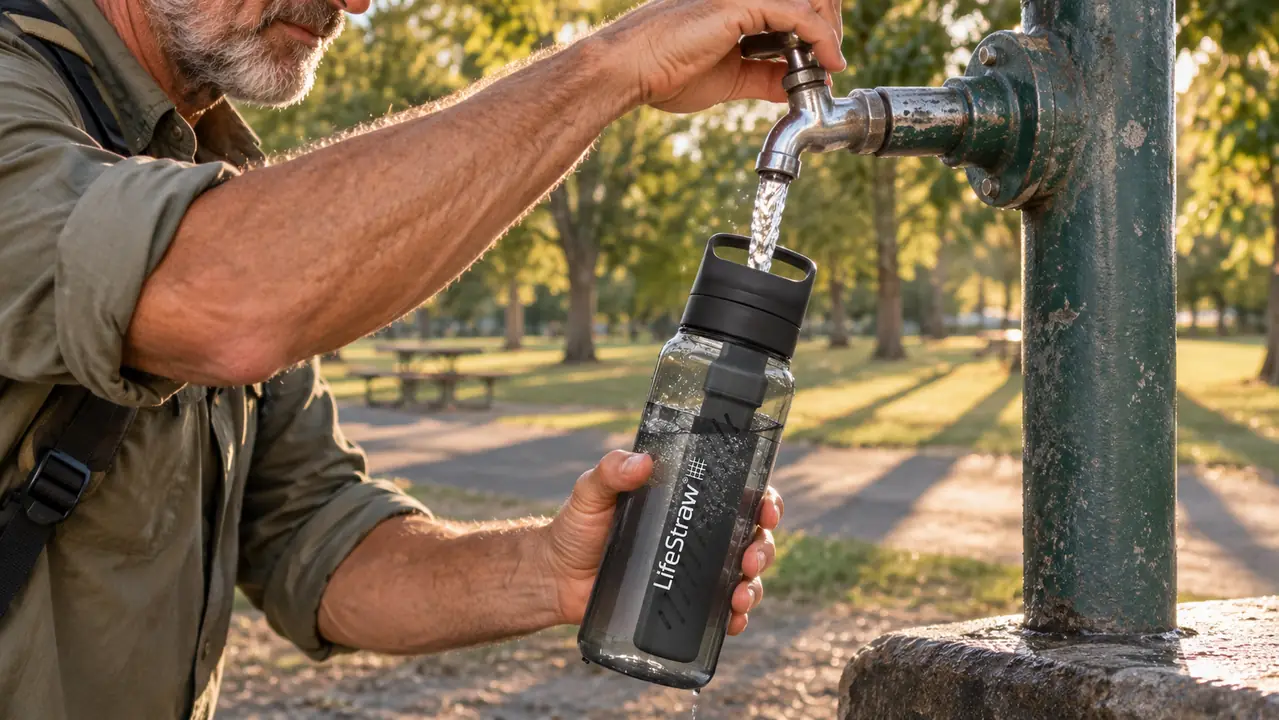
The bottle pulls ahead anywhere the water exists but the store does not. On the second morning of a drive through southern Utah I filled it at the sink in a gas station restroom, put the top back on, and drank it while I pumped gas. A case of bottles would have meant I was already out, or that I was buying another case at a counter that knows it has you. Over a two week drive that is the difference between one bottle and four or five cases, and it is also the difference between hoping there is a store and knowing there is a tap. The chlorine reduction matters more than I expected. Motel tap water in some towns tastes like a swimming pool, and the carbon filter is the reason I finish the bottle instead of leaving it on the nightstand until morning. The clearer example came in June, on day nine of a two week drive, when I filled it at a campground spigot before sunrise and drank from it three hours later at a pullout where I stopped to sketch a mesa. No cooler, no ice, no store for miles in either direction. The water tasted like nothing in particular, which was exactly what I wanted from it. The bottle rode in the door pocket the whole way and I never once thought about it until I was thirsty, which is the highest compliment I can pay a piece of gear at sixty one years old.
The second place it wins is the one I did not think about until I needed it. On a Forest Service road with no services for forty miles, the question stops being about taste and starts being about supply. I have never had to drink from a creek and I would rather not start, but knowing the membrane is rated against bacteria and parasites changes how far out I am willing to go alone at sixty one. It also keeps the car tidier. One bottle, refilled, means no empties under the passenger seat and no sack of plastic to carry to a bin at every stop. Small thing. After ten days it stops being small.
Where Buying Bottled Water Wins
Bottled water wins on the first sip, and I am not going to pretend otherwise. A sealed bottle tastes the same in Tennessee as it does in New Mexico. The LifeStraw Go tastes like whatever I put in it, and while the carbon filter knocks the chlorine back, it does not turn hard mineral tap water into something delicate. Then there is temperature. On a hot afternoon at a trailhead, a bottle pulled out of the cooler is cold and the water in my filter bottle is whatever the tap gave me three hours earlier. I have started filling it the night before and leaving it in the cooler for exactly that reason, which is an extra step bottled water never asks of me. There was an afternoon in August two summers ago, well into the nineties at a trailhead outside Bryson City, when I had done the filter bottle version and the friend I was with had done the cooler version. Hers was cold. Mine was the temperature of the inside of a parked car. She was right and I knew she was right, and no rating against bacteria closes that particular gap.
The other honest concession is upkeep. Bottled water asks nothing. The LifeStraw Go asks me to rinse it, to keep an eye on the carbon filter, and to change that filter roughly every 26 gallons. The membrane is rated for up to 1,000 gallons, about five years of daily use, so that part is not a chore. But the carbon filter comes around more often than I expect, and if I ignore it the water starts tasting like the tap again. When I am tired at the end of a long drive and the motel sink is right there, a case of bottles in the trunk is the version of the trip where I do not have to think about any of it.
Fill It From Any Tap Between Here and the Trailhead
One bottle in the door pocket instead of a case in the trunk. Rated against bacteria and parasites, with a carbon filter for the chlorine taste that motel taps leave behind.
Amazon Check Today's Price on Amazon →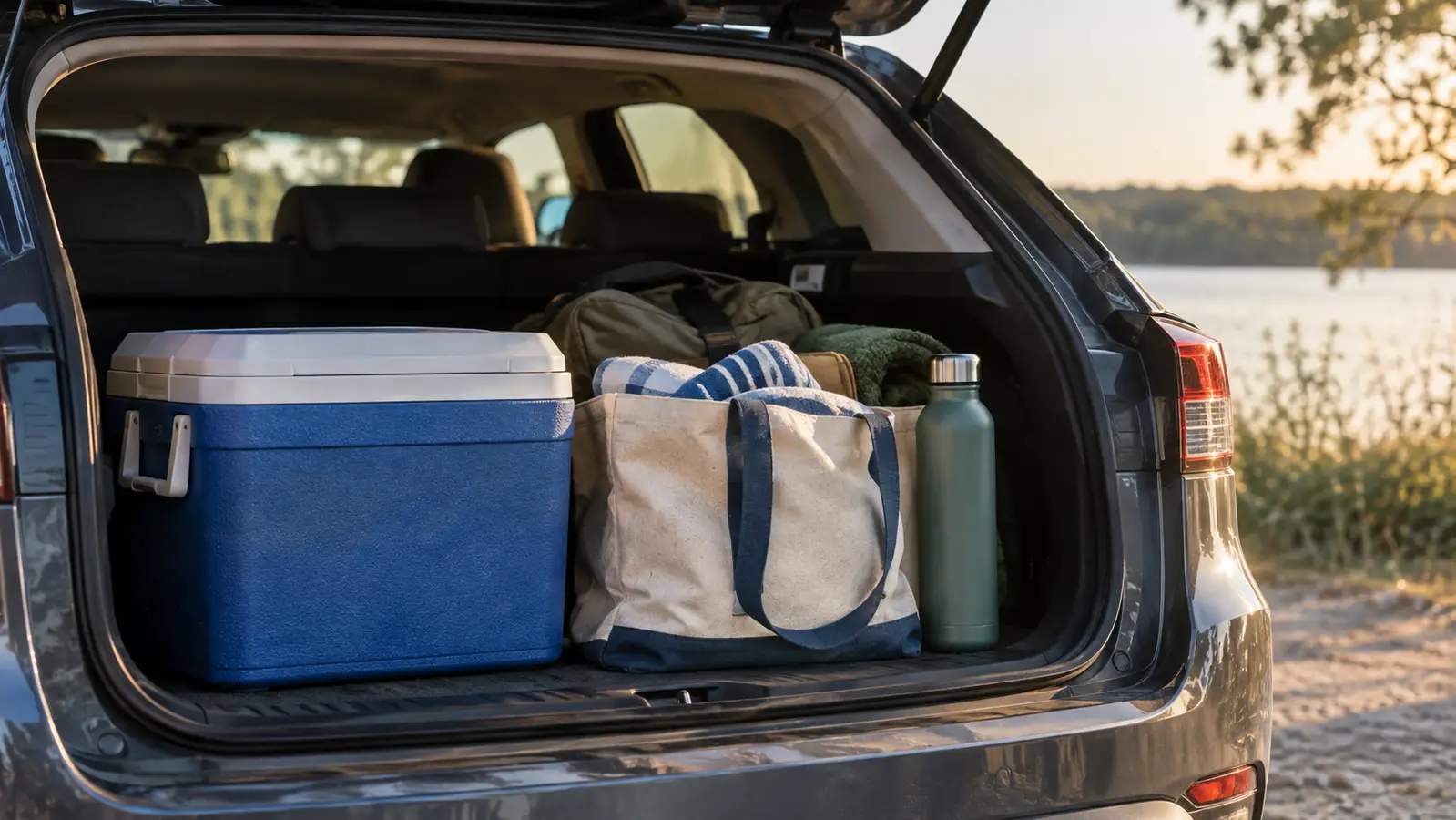
What Two Summers of Refilling Actually Looked Like
The bottle weighs 268 grams empty and stands 11.02 inches tall, which is the detail that decided it for me. My back does not want a full case swinging in and out of the trunk at every stop, and a case is heaviest exactly when you are tired. This goes in the door pocket or the side pocket of the daypack and I forget it is there until I want it. At 1 liter it is a real drink, not a sip, so one fill covers a morning of walking and a couple of hours at the easel. Packing is where the size actually pays off. The easel bag goes in first, then the cooler, then a canvas tote with the paints, and by the time those three are in there is not much trunk left. A case of water used to be a fourth thing that had to fit and it never fit well. Now the bottle goes in the door pocket before I even open the trunk, and the packing order stopped being a negotiation. I noticed the difference most on the drive home, when the trunk is full of paintings and there is no room for anything I do not actually need.
The filter math is simpler than I feared. The carbon filter goes about 26 gallons, and the membrane is rated for up to 1,000 gallons, roughly five years of daily use. On a road trip I am drinking maybe a liter or two a day, so the carbon filter is the piece that comes around, and once I wrote the change date on a strip of tape on the bottle I stopped thinking about it. I rinse the bottle most evenings at whatever sink I have, and I let it dry open overnight when I remember. That is the entire routine. It is not nothing, but it is about ninety seconds.
What I still buy bottles for: the flights to my sister in Tucson, where I do not want to be fussing with a filter at a security line; the last night of a trip when I am unpacking and cannot be bothered; the cooler, because cold matters; and guests, because handing someone a filter bottle and an explanation is not hospitality. The cooler stays and I have made my peace with it. Cold water on a hot day is a pleasure, not a utility, and I am not going to optimize the pleasure out of a trip I take to enjoy myself. That is a small case, not a week's worth. The case went from being the water supply to being the backup, and that shift is the whole review in one sentence.
The membrane is rated for up to 1,000 gallons, about five years of daily use. The carbon filter goes about 26 gallons. That is the entire maintenance calendar.
Two Things I Would Not Do With It
I would not drink out of a stagnant pond and call it safe. The membrane is rated against bacteria and parasites, and that is a real thing to have in your bag, but it is not a promise about everything else that might be in standing water. If a ranger tells me to boil, I boil or I drive on. The bottle earns its place on taps that taste wrong and sinks I would rather not think about, and treating it as a licence to drink anything is how people get sick. What it has actually done for me is narrower and more useful than that. It removed the small daily hesitation about public water, the one that used to have me buying a bottle out of habit rather than thirst, and it did that without asking me to trust anything I could not read on the label.
I also would not buy it for someone who will not rinse it out. A filter bottle that gets forgotten in a hot car for a week is worse than no filter bottle, because you will still trust it. I know myself well enough to say this because I have come close. A bottle rolled under the seat for most of a July, and when I found it I rinsed it and used it anyway and then spent a day wondering whether I should have. That is the failure mode with a filter. It is quiet. A case of bottles that has gone warm and flat announces itself the moment you open one. A filter bottle that has been sitting in the heat does not announce anything, and you have to be the kind of person who remembers. If you are the kind of traveler who wants zero steps between thirsty and drinking, buy the case of bottles and enjoy your trip. That is not a failure. It is just a different way of spending your attention.
Who Should Buy Which
If you drive, if you stop at parks and trailheads and gas stations, and if you have ever stood in a motel bathroom at ten at night wondering whether the tap is fine, the LifeStraw Go is the one to buy first. It earns its space in the door pocket by the second day, and the chlorine filter is what keeps you actually drinking instead of leaving the bottle full. Buy bottled water instead if your trips are short, if you are flying and do not want to handle a filter at all, or if you know you will not rinse the thing out when you get home. The arrangement I actually use is both, and it is not a compromise. The bottle handles the driving days and the taps. The small case handles the cooler, the last night, and the times when thinking about water is the last thing I want to do.
The Bottle That Replaced Most of My Case of Water
1 L, BPA free, manual, nothing to charge and nothing to plug in. Fill it at a tap and keep driving.
Amazon Check Today's Price on Amazon →