For years my packing list for a painting trip began with the same line: water. Not a bottle. Water. I would load a case into the back of the Outback, wedge it next to the easel and the folding stool, and by the third day I would be driving through some town I had never heard of, looking for more. Bottles rolling under the seat. Bottles sweating on the floor mat. A small thing that ate a real amount of room.
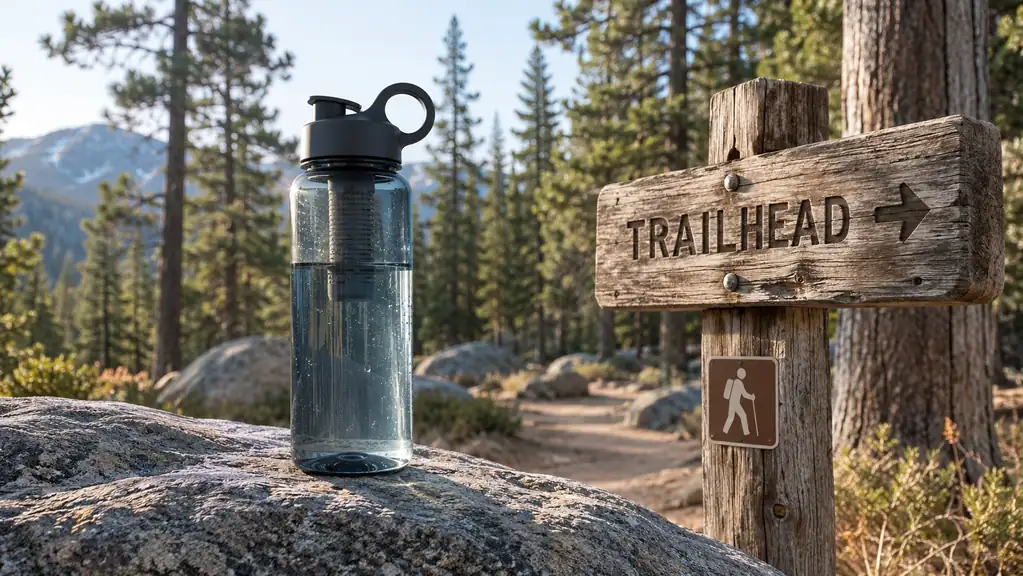
The tap at the trailhead is what finally wore me down. I had walked a mile and a half up to an overlook with a watercolor block under my arm, and the fountain by the parking lot tasted like a swimming pool. A week later, at a different trailhead, a sign said the water was not treated. I stood there with an empty bottle in my hand, sixty-one years old with a stiff back, and thought: this is silly. That night I looked up the LifeStraw Go Series bottle, and a week later I owned one.
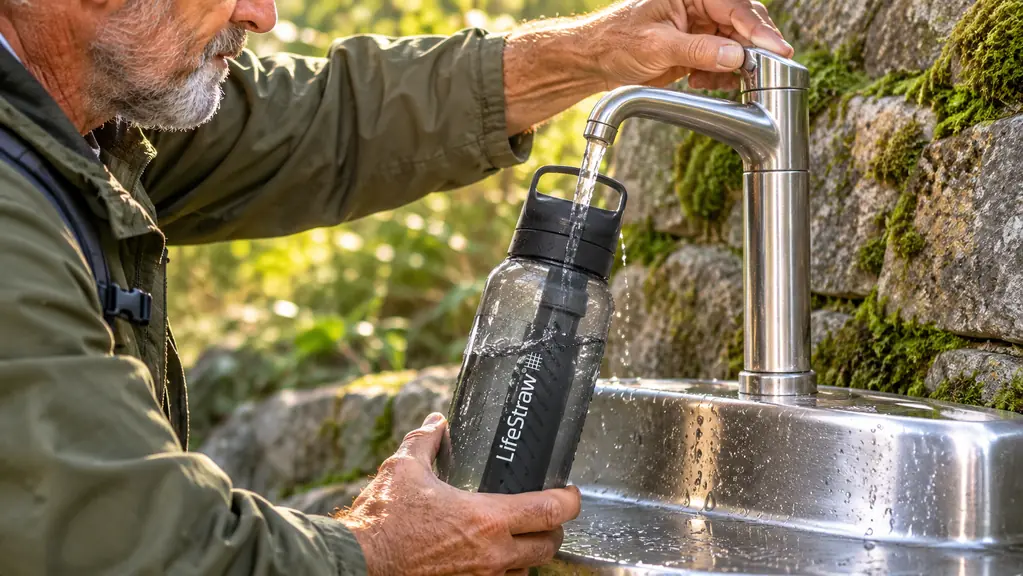
It holds 1 liter, it weighs 268 grams, and it measures 11.02 inches tall by 3.54 inches across, which matters when you are trying to fit it into the side pocket of a daypack. The bottle is plastic and BPA-free. I have carried it on every trip since, and it has retired the case of water from my trunk.
What it does is simple enough to explain at a kitchen table. You fill it at a tap. The carbon filter reduces chlorine, odors and organic chemical matter, which is the part you taste. The membrane microfilter protects against bacteria and parasites, 99.999999% of bacteria and 99.999% of parasites by LifeStraw's own numbers. There is no battery and nothing to charge. It is a manual filter built into a bottle, and it works while you are standing there.
What it does not do is worth saying plainly. The listing puts the maximum supported TDS at 300 ppm, so it is built for ordinary taps and fountains, not for brackish water or a source you know nothing about. It is not a treatment plant, and I would not ask it to be one. It is a way to stop buying bottled water when the water in front of you is normal municipal water in a place you have never been before.
The carbon filter is rated for about 26 gallons and the membrane microfilter for 1,000 gallons, roughly five years of daily use. Two years in, I have replaced neither.
The bottle that retired the case of water in my trunk
1 liter, 268 grams, manual filtration with no battery and nothing to charge. Fill it at a tap and keep walking.
Amazon Check Today's Price on Amazon →The places I have filled it: a drinking fountain at a state park in Tennessee, the sink in an airport bathroom after security, a gas station tap outside Knoxville at six in the morning, and my sister's kitchen in Tucson, where the water tastes faintly of the pipes and stops tasting that way once it has been through the LifeStraw bottle.
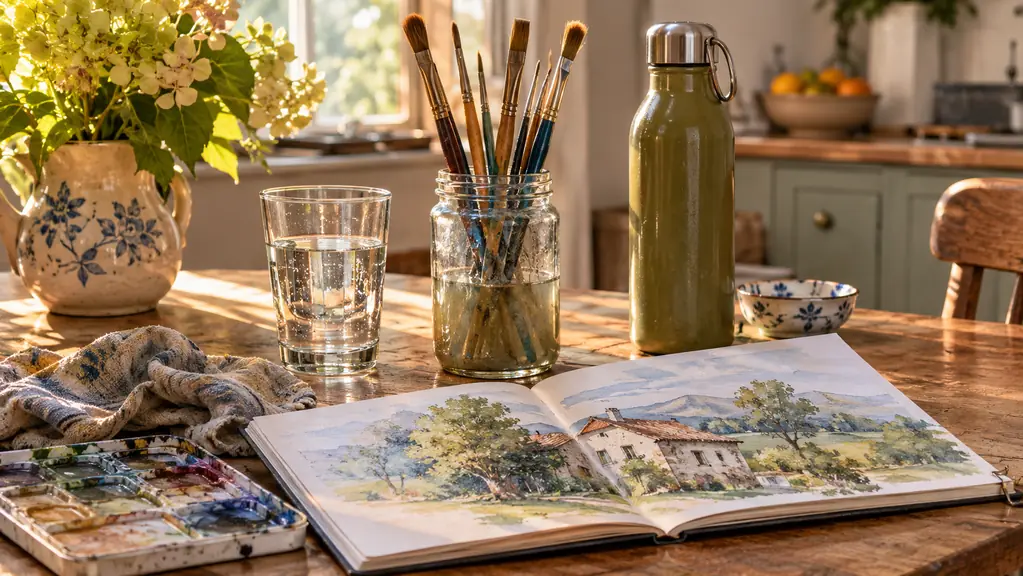
On painting days it sits next to the palette while I work. I drink more water when it is already in my hand, which is the whole reason I wanted it. I stop less often. I reach the overlook with the light still good instead of turning around to find a store.
Walt does not come on most of these trips. He stays home with the garden and I go, and the car is mine for two weeks at a stretch. When you travel alone, small systems matter more. There is nobody in the passenger seat to hold the bottle while you dig for the parking pass, and nobody to remind you to drink.
The 1-liter size is right for me. A smaller bottle would mean refilling every hour, and a larger one would be a weight on my back by the second mile. The one honest annoyance is the carbon filter, which lasts about 26 gallons and needs replacing well before the membrane does. I keep a spare in the glove box, next to the tire gauge and a roll of paper towels.
I have backflushed it at a motel sink with a cup of water and it came back to a normal flow. That is the whole maintenance routine. Nothing about it has been fussy, and nothing about it has been exciting, which is what I want from a water bottle.
It goes through airport security empty, which I did not expect to be a convenience. I fill it at a fountain past the checkpoint and I am done. On the flight to Tucson I am not buying a plastic bottle in the terminal, and I am not arriving at my sister's house parched and out of sorts.
What I'd Tell You If We Were Sitting at My Kitchen Table
If you were sitting at my kitchen table, here is what I would say. Get the 1-liter. The smaller one means refilling too often and the larger one means carrying more than you need. Get a spare carbon filter when you order, so you are not hunting for one in a strange town, because the membrane goes five years and the carbon does not. Fill it from taps you would already drink from, and do not ask it to rescue water you would not drink. The bottle did not fix my back. It fixed a smaller, dumber problem, which is that I used to plan my whole day around water. Now I fill it in the morning, put it in the pocket of the pack, and go paint.
If you are going to be on the road anyway, stop buying water by the case
The 1-liter bottle I fill at trailhead taps, gas station sinks and my sister's kitchen in Tucson. Manual filtration, 268 grams, nothing to charge.
Amazon See the LifeStraw Go Series on Amazon →